

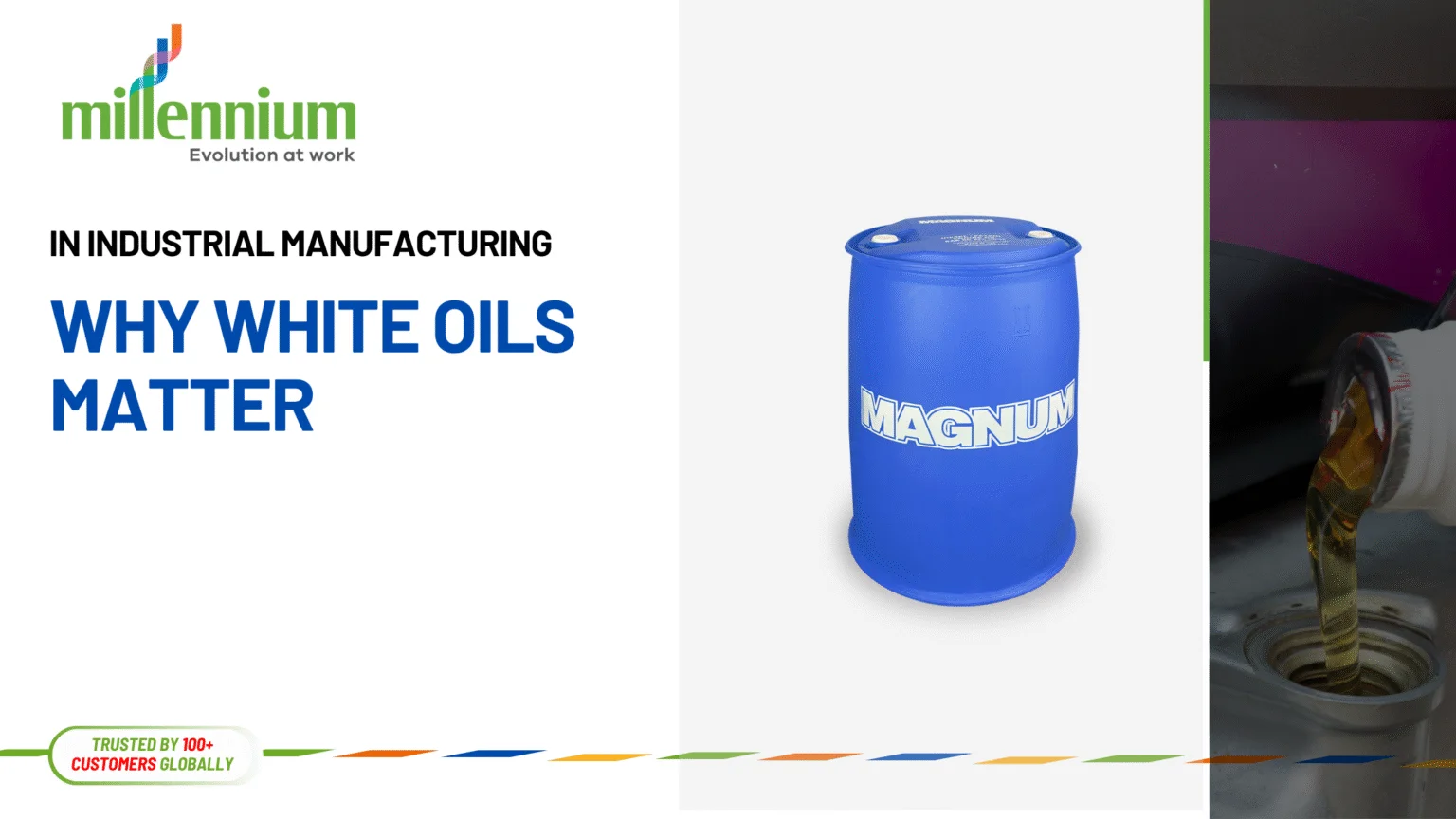
In modern industrial manufacturing, material purity, consistency, and safety are as critical as performance. Among the many specialty lubricants and process fluids used across industries, white mineral oils play a unique and indispensable role. Often misunderstood as cosmetic-only ingredients, white oils are in fact widely used across plastics, polymers, textiles, rubber, food packaging, and chemical processing, where cleanliness and stability are non-negotiable.
This article explores what white mineral oil is, its real-world industrial applications and white oils industrial use, and why high-quality formulations such as MAGNUM White Oils are trusted by manufacturers.
What Exactly Is White Mineral Oil?
White mineral oil is a highly refined petroleum-based oil produced through advanced hydrogenation and purification processes. Unlike conventional mineral oils, white oils are colorless, odorless, tasteless, and chemically inert. Impurities such as sulfur compounds, aromatics, and unsaturated hydrocarbons are removed to ensure exceptional purity.
For industrial users, this refinement means:
-
Excellent oxidation stability
-
Minimal chemical reactivity
-
Safe interaction with sensitive materials
-
Consistent viscosity and performance
White oils used in industrial manufacturing are not cosmetic products, but technical-grade fluids designed to meet stringent process and safety requirements.
Real-World Applications (Non-Cosmetic, All Business)
1. Plastics & Polymers
In plastics manufacturing, white oils are used as processing aids, plasticizers, and mold-release agents. They improve polymer flow, reduce friction during extrusion or molding, and enhance surface finish without affecting color or clarity. Their chemical neutrality ensures compatibility with polyethylene, polypropylene, PVC, and other polymers.
2. Adhesives & Sealants
White oils play a critical role in hot-melt adhesives and sealant formulations. They act as viscosity modifiers and extenders, improving flexibility and workability. Because white oils industrial use demands purity, they prevent discoloration, odor issues, and chemical instability in finished adhesive products.
3. Textile Manufacturing
In textile operations, white oils are used as fiber lubricants, spinning oils, and knitting machine lubricants. They reduce yarn breakage, control static electricity, and ensure smooth machine operation. Their stain-free nature makes them ideal for fabrics that require further dyeing or finishing.
4. Rubber & Elastomers
Rubber compounding relies heavily on white oils as softeners and processing oils. They improve elasticity, dispersion of fillers, and overall compound consistency. White oils are particularly preferred for light-colored rubber goods, technical elastomers, and products where odor and purity matter.
5. Food Packaging (Non-Contact Zones)
In food packaging machinery and materials, white oils are used in non-food-contact zones such as conveyor lubrication, forming equipment, and packaging films. Their low volatility and clean performance help maintain hygienic production environments while meeting regulatory expectations.
6. Chemical & Agrochemical Formulations
White oils serve as carriers, solvents, and diluents in chemical and agrochemical products. Their stability ensures uniform dispersion of active ingredients, while their inert nature prevents unwanted reactions. This makes them suitable for specialty formulations where consistency is critical.
Why MAGNUM’s White Oils Stand Out
Not all white oils are created equal. MAGNUM White Oils are engineered specifically for demanding industrial environments. Key advantages include:
-
High refining standards for consistent purity
-
Excellent thermal and oxidation stability
-
Low volatility and long service life
-
Compatibility with a wide range of materials
MAGNUM focuses on delivering reliable, process-safe white oils that meet the expectations of modern manufacturing lines, minimizing downtime and quality issues.
Compliance, Safety & Standards
Industrial white oils must meet strict regulatory and quality benchmarks, including international pharmacopeia and food-grade standards where applicable. High-quality white oils comply with:
-
FDA and EU regulations (for relevant applications)
-
ISO quality management requirements
-
Industry-specific safety norms
Using certified white oils reduces compliance risks and supports safer working environments, especially in regulated industries.
How to Use & Store It Right
Picking the Right Grade
White oils are available in different viscosity grades, each suited for specific applications. Low-viscosity oils are ideal for high-speed textile machinery or spray systems, while higher-viscosity grades are better for rubber processing or adhesive formulations. Always select the grade recommended by your equipment manufacturer or formulation guidelines.
Storage & Handling
To preserve purity and performance:
-
Store white oil in clean, sealed containers
-
Avoid exposure to dust, moisture, and direct sunlight
-
Use dedicated transfer equipment to prevent contamination
-
Follow FIFO (First In, First Out) inventory practices
Using white oil correctly is essential to preserve its purity and performance throughout its service life.
Final Word
White oils may not always be visible in finished products, but their impact on process efficiency, product quality, and operational safety is undeniable. From plastics and textiles to rubber and chemical manufacturing, white oils industrial use continues to grow as industries demand cleaner, more reliable process fluids.
Choosing a trusted supplier like MAGNUM ensures you get high-purity white oils that meet today’s industrial challenges—quietly supporting production, consistency, and compliance behind the scenes.