

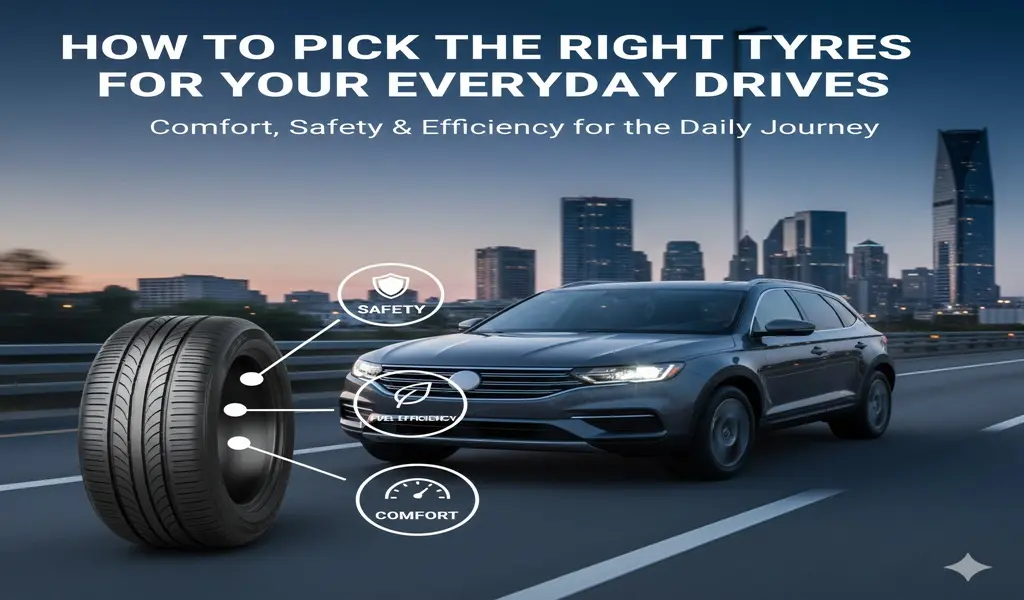
Your vehicle’s tyres are the only contact point between you and the road. This makes them the single most important safety feature on your car. In the United Arab Emirates, driving conditions can be demanding on vehicle components. The extreme heat and high-speed highways require reliable equipment.
Prioritizing tyre quality ensures that your daily commute remains safe and comfortable. It also improves fuel efficiency and handling responsiveness. Many drivers overlook the importance of selecting the correct specifications for their needs. However, making an informed choice can save you money in the long run.
Understanding the specific needs of your vehicle is the first step. The process of choosing tyres for daily driving UAE residents rely on involves checking several factors. You must consider the climate, road surface, and your personal driving habits. This guide will help you navigate these choices confidently.
Why Choosing the Right Tyres Matters in the UAE
The environment in the UAE presents unique challenges for motorists. The combination of scorching summers and diverse road infrastructure tests tyre durability. A tyre that performs well in Europe might not be suitable here. Local conditions demand robust construction and heat-resistant compounds.
Safety is the primary reason to invest time in selecting the right tyres. Worn or unsuitable tyres significantly increase stopping distances. This can be dangerous during sudden braking on busy highways. Proper traction is essential for avoiding accidents in heavy traffic.
Furthermore, the right tyres contribute to a smoother driving experience. They absorb road imperfections and reduce cabin noise. This makes long drives between Dubai and Abu Dhabi much less tiring. Comfort is a key factor for daily commuters.
Effects of Hot Weather on Tyres
Summer temperatures in the UAE frequently exceed 40 degrees Celsius. The temperature of the asphalt can be much higher than the air temperature. This intense heat causes the air inside your tyres to expand rapidly.
Over-inflation due to heat can lead to a harsh ride and uneven wear. It also increases the risk of a sudden blowout at high speeds. Rubber compounds can degrade faster when exposed to constant high temperatures.
Choosing tyres designed for hot climates helps mitigate these risks. These tyres are built with materials that resist heat buildup. They maintain their structural integrity even during the hottest months.
Impact of Traffic and Road Quality
Urban driving in cities like Dubai involves frequent stopping and starting. This puts immense stress on tyre treads and sidewalls. Constant braking generates friction heat that wears down rubber quickly.
Additionally, drivers often encounter speed bumps and occasional potholes. Hitting these obstacles with low-quality tyres can cause internal damage. Tyres with strong sidewalls offer better protection against impact.
Highway driving places a different kind of stress on your vehicle. Sustained high speeds require tyres that provide excellent stability. The right choice ensures your car tracks straight and handles predictably.
Key Factors to Consider When Selecting Tyres
Walking into a tyre shop can be overwhelming due to the variety of options. However, focusing on specific criteria simplifies the decision process. You need to match the tyre capabilities with your vehicle requirements.
Always refer to your vehicle owner’s manual for the manufacturer’s recommendations. This document provides the baseline for what your car needs. Deviating too far from these specs can compromise safety and performance.
Tyre Size and Specifications
The most critical factor is getting the size right. You can find this information on the sidewall of your current tyres. It is a sequence of numbers and letters, such as width and rim diameter.
Using the correct size ensures your speedometer remains accurate. It also guarantees that the tyre fits inside the wheel well without rubbing. This is vital for maintaining the handling characteristics of the car.
When selecting tyres for your vehicle, drivers often consider standard sizes like 195/65R15 to ensure safety, optimal grip, and long-lasting performance on UAE roads. This ensures that the load is distributed evenly across the axle.
Tyre Type and Tread Pattern
For the UAE, summer tyres are often the best choice. They are designed to withstand high temperatures and dry roads. Their rubber compound remains firm to provide grip without becoming too soft.
All-season tyres are another popular option for many drivers. They offer a balance of performance and longevity. However, they may not offer the same heat resistance as dedicated summer tyres.
The tread pattern determines how the tyre disperses water and grips the road. An asymmetric pattern often provides good cornering stability. Directional treads are excellent for water displacement but are rare in dry climates.
Tyre Load and Speed Ratings
Every tyre comes with a load index and a speed rating. The load index indicates the maximum weight the tyre can support. You must choose a tyre that can handle your vehicle’s gross weight.
This is especially important for families who carry luggage or multiple passengers. Overloading a tyre with a low index can lead to failure. Always check the door jamb sticker for the minimum load requirement.
The speed rating denotes the maximum safe speed for the tyre. In the UAE, where highway limits are high, this is crucial. Ensure your tyres are rated for speeds of 120 km/h or more.
Brand Reputation and Warranty
Investing in a reputable brand offers peace of mind. Established manufacturers invest heavily in research and safety testing. They use higher quality materials that last longer.
Avoid buying unknown or extremely cheap brands to save money. These tyres often wear out quickly and offer poor grip. They may end up costing more in the long run due to frequent replacement.
Check the warranty offered by the manufacturer or retailer. A good warranty covers manufacturing defects for several years. It is a sign that the company stands behind its product quality.
Maintenance Tips for Prolonging Tyre Life
Buying the right tyres is only half the battle. Regular maintenance is required to get the most out of your investment. Neglecting care can lead to premature wear and safety hazards.
Simple checks can extend the lifespan of your tyres significantly. You do not need to be a mechanic to perform basic maintenance. Making these checks a habit saves money and ensures safety.
Regular Tyre Pressure Checks
Tyre pressure fluctuates with changes in ambient temperature. In the UAE, you should check pressure at least once a month. It is best to check when the tyres are cool, usually in the morning.
Under-inflation causes excessive heat buildup and sidewall damage. Over-inflation leads to reduced grip and uneven center wear. Both scenarios reduce the life of the tyre.
Use a reliable pressure gauge to ensure accuracy. Refer to the pressure values listed on the driver’s door pillar. Adjust the pressure if you are carrying heavy loads.
Rotating and Balancing Tyres
Front and rear tyres wear differently due to steering and weight distribution. Front tyres usually wear faster on the edges. Rotating them helps balance this wear across all four tyres.
It is recommended to rotate tyres every 10,000 kilometres. This simple service can extend tyre life by thousands of kilometres. It ensures you get maximum value from the set.
Balancing involves adding small weights to the wheel rim. This prevents vibration at high speeds. Unbalanced wheels cause patchy wear and driver fatigue.
Alignment and Suspension Checks
Wheel alignment ensures your tyres roll straight and true. Hitting a curb or pothole can knock the alignment out. This causes the tyres to drag sideways, scrubbing off rubber rapidly.
If your steering wheel is off-center, you likely need an alignment. Uneven wear on one side of the tyre is another sign. Regular alignment checks protect your tyre investment.
Worn suspension components can also damage tyres. Bad shock absorbers cause the tyre to bounce on the road. This leads to cupping wear and reduced braking efficiency.
How Smart Driving Habits Extend Tyre Life
Your driving style has a direct impact on tyre longevity. Aggressive driving accelerates wear and tear on all vehicle components. Adopting smoother habits is free and effective.
Being mindful of how you drive protects your wallet and your car. It reduces the frequency of tyre replacements. It also improves overall road safety for everyone.
Smooth Acceleration and Braking
Rapid acceleration spins the wheels and burns off tread rubber. It puts unnecessary stress on the tyre structure. Accelerating gently allows the tyres to grip without slipping.
Sudden braking causes flat spots and heavy wear. Anticipating traffic flow allows you to slow down gradually. This reduces friction and heat buildup in the tyres.
Smooth driving also improves fuel economy significantly. It puts less strain on the engine and transmission. It creates a more comfortable ride for passengers.
Avoiding Excessive Loads and Speeds
Every car has a maximum weight limit. Exceeding this limit places dangerous stress on the tyres. The sidewalls can bulge and overheat under the excess weight.
Remove unnecessary items from your trunk to reduce load. Travel light whenever possible. This simple step helps preserve your tyres and saves fuel.
Driving at very high speeds also generates excessive heat. While UAE highways allow for speed, driving sensibly is better for tyres. High heat softens the rubber and accelerates degradation.
Conclusion
In conclusion of this blog, Selecting the correct tyres is a fundamental part of vehicle ownership in the UAE. It ensures that your car handles safely in extreme heat and traffic. By considering factors like size, type, and ratings, you make a smart choice.
Remember to check your tyre specifications before purchasing. Regular maintenance like pressure checks and rotation keeps them in top condition. These small efforts yield significant benefits in safety and savings.
Take the time to inspect your tyres today. If they show signs of wear, consult a professional. Check local tyre services or online tyre guides for UAE drivers to find the best options for your vehicle.
Frequently Asked Questions
How often should I check my tyre pressure in the UAE?
You should check your tyre pressure at least once a month. It is also important to check before long trips, especially in hot weather.
Do tyre sizes affect fuel efficiency?
Yes, using the correct tyre size improves rolling resistance. This helps the engine work efficiently and improves fuel economy.
Can regular tyre maintenance prevent accidents?
Yes, proper inflation, rotation, and tread monitoring improve grip. This leads to better braking and handling, which helps prevent accidents.
Are all-season tyres suitable for UAE roads?
Yes, they balance heat resistance and daily driving needs. They are a versatile choice for most drivers in the region.
How do I know when to replace tyres?
You should replace tyres when tread depth falls below 1.6 mm. Also replace them if sidewalls show visible damage or cracks.