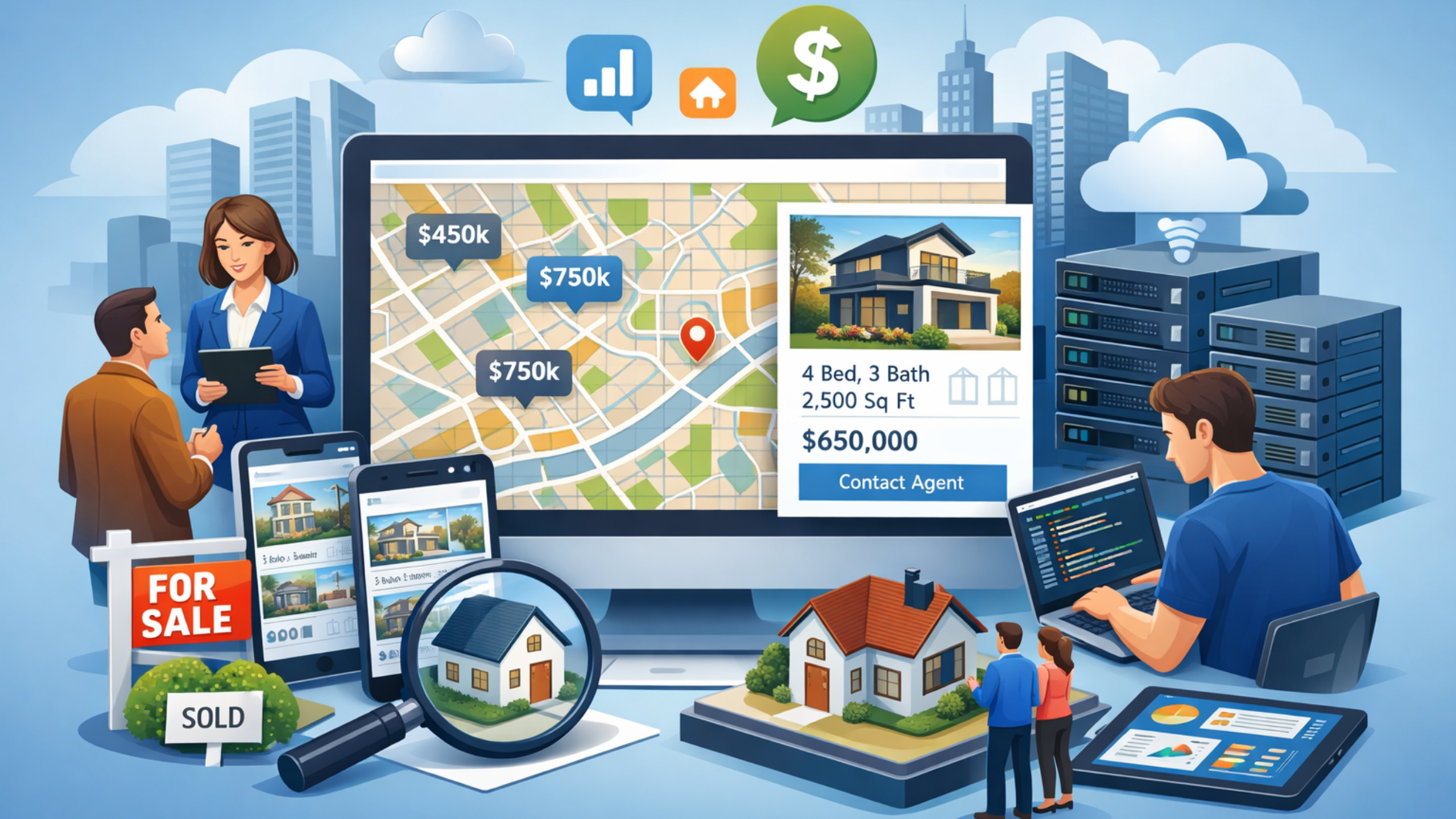
The real estate industry has undergone a massive digital shift over the past decade. Agencies, brokers, and property portals now rely heavily on online platforms to manage listings, attract buyers, and close deals faster. A Zillow-inspired platform works as a centralized ecosystem where property discovery, valuation insights, agent connections, and market intelligence come together in one place.
When planning zillow clone app development, it is important to understand that the goal is not just to replicate property listings. A scalable Zillow-like platform acts as a business engine for agencies, an acquisition channel for brokers, and a discovery hub for buyers, renters, and investors. Scalability, data accuracy, and multi-stakeholder support are what separate a basic property listing app from a true market leader.
Core Business Models Behind a Zillow Clone
Before moving into technical execution, defining the right business model is essential. A zillow clone app typically supports multiple revenue streams that grow alongside platform adoption.
Advertising and featured listings are one of the most common monetization models. Agents and agencies pay to promote properties or highlight their profiles to gain higher visibility in competitive markets. Subscription-based plans are another strong option, where brokers access premium analytics, lead management tools, and advanced CRM features.
Some platforms also monetize through referral fees by connecting buyers with agents and earning a commission per successful lead. For large property portals, data monetization through market insights, pricing trends, and valuation tools can become a long-term revenue driver.
Key Stakeholders and Their Platform Expectations
A scalable real estate platform must balance the needs of multiple user groups without compromising performance or usability.
Property Buyers and Renters
End users expect fast property search, accurate pricing, location intelligence, high-quality images, and detailed descriptions. Advanced filters, saved searches, and alerts for new listings play a critical role in engagement and retention.
Real Estate Agents and Brokers
Agents rely on the platform for lead generation, property management, branding, and performance tracking. They expect seamless listing uploads, lead notifications, CRM integration, and analytics that help them convert prospects faster.
Agencies and Property Portals
Agencies need centralized dashboards to manage multiple agents, listings, and markets. Scalability becomes critical here, as agencies may operate across cities or regions with thousands of properties and users accessing the system simultaneously.
Essential Features That Define a Scalable Zillow Clone App
A successful zillow clone app is built on a feature set that supports growth without sacrificing speed or reliability.
Advanced Property Search and Filtering
Search functionality must handle millions of listings while delivering instant results. Filters should include location, price range, property type, size, amenities, construction status, and neighborhood insights. Map-based search with real-time updates significantly enhances user experience.
Intelligent Property Valuation Tools
Automated valuation models help users estimate property prices based on historical data, market trends, and comparable listings. These tools increase user trust and position the platform as a data-driven authority.
Agent and Agency Profiles
Dedicated profiles allow brokers and agencies to showcase expertise, reviews, transaction history, and active listings. This builds credibility and encourages direct inquiries from serious buyers.
Lead Management and CRM Integration
Scalability depends on how well leads are handled. Built-in CRM tools help agents track inquiries, schedule follow-ups, and analyze conversion rates. Integration with external CRM systems ensures flexibility for enterprise clients.
High-Performance Media Handling
Property images, videos, and virtual tours are core engagement drivers. A scalable infrastructure must support heavy media uploads and fast delivery across devices without performance degradation.
Technology Stack for Building a Scalable Zillow Clone
Choosing the right technology stack directly impacts performance, security, and future scalability.
Frontend Architecture
Modern frameworks such as React or Vue enable fast, responsive user interfaces. For mobile apps, native or cross-platform solutions like Flutter or React Native ensure consistent performance across devices.
Backend and Database Design
A microservices-based backend architecture allows different modules, such as listings, users, payments, and analytics, to scale independently. Databases must handle high read-write operations efficiently, often using a combination of relational and NoSQL databases.
Cloud Infrastructure and Scalability
Cloud platforms provide auto-scaling, load balancing, and global availability. This ensures the platform remains stable during traffic spikes caused by new listings, marketing campaigns, or seasonal demand.
Data Security and Compliance
Real estate platforms handle sensitive user and financial data. Secure authentication, encrypted data storage, and compliance with regional data protection laws are non-negotiable for long-term trust and growth.
Managing Large-Scale Property Data Effectively
One of the biggest challenges in zillow clone app development is handling massive datasets. Property information must be accurate, up to date, and searchable in real time.
Data normalization, automated validation, and periodic cleanup routines help maintain listing quality. Integrating third-party data sources, such as MLS feeds and public records, expands inventory while ensuring reliability. Caching strategies and search indexing technologies significantly improve performance as data volume grows.
Multi-City and Multi-Region Expansion Strategy
Scalability is not limited to technology alone. Business logic must support expansion into new cities and regions without disrupting existing operations.
This includes configurable pricing models, region-specific regulations, local language support, and currency handling. A flexible admin panel allows platform owners to onboard new markets, agencies, and agents with minimal technical intervention.
Performance Optimization for High Traffic Platforms
As user base and listings grow, performance optimization becomes a continuous process. Efficient API design, server-side caching, and content delivery networks reduce latency and improve load times.
Monitoring tools help identify bottlenecks before they impact users. Regular stress testing ensures the platform can handle peak loads, especially during high-demand periods such as property launches or market shifts.
Customization and Branding for Agencies and Portals
Agencies often want branded experiences within the main platform. White-label capabilities allow agencies to customize themes, logos, and domain mappings while leveraging the core infrastructure.
This approach increases adoption among enterprise clients and opens additional revenue streams without duplicating development efforts.
Future-Proofing a Zillow Clone Platform
To remain competitive, a zillow clone must evolve with market trends. AI-driven recommendations, predictive pricing analytics, and personalized property suggestions enhance user engagement over time.
Integration with emerging technologies such as virtual reality property tours and smart neighborhood data can further differentiate the platform. A modular architecture ensures new features can be added without disrupting existing services.
Conclusion
Building a Zillow-inspired platform that scales for agencies, brokers, and property portals requires more than replicating surface-level features. Successful zillow clone app development focuses on scalability, data accuracy, multi-stakeholder support, and long-term flexibility. By combining a robust technology stack with thoughtful business logic and future-ready architecture, businesses can develop a real estate app that grows seamlessly with market demand and user expectations.
Frequently Asked Questions
How long does it take to build a scalable Zillow clone?
The development timeline depends on feature complexity and scalability requirements. A full-featured platform with advanced search, valuation tools, and multi-agency support typically takes several months to build and test.
Is a zillow clone app suitable for small real estate agencies?
Yes, the platform can be designed to support both small agencies and large enterprises. Modular features and tiered plans allow agencies to start small and scale as their business grows.
What makes a zillow clone different from a basic property listing app?
A zillow clone focuses on data intelligence, advanced search, valuation tools, agent ecosystems, and scalability. It goes beyond listings to provide market insights and lead-generation capabilities.
Can a Zillow clone support international property markets?
Yes, with the right architecture, the platform can support multiple regions, currencies, languages, and compliance requirements, making it suitable for global expansion.
How can agencies monetize their presence on a Zillow-like platform?
Agencies can generate revenue through featured listings, premium subscriptions, lead referrals, and data-driven insights that improve sales efficiency and conversion rates.