

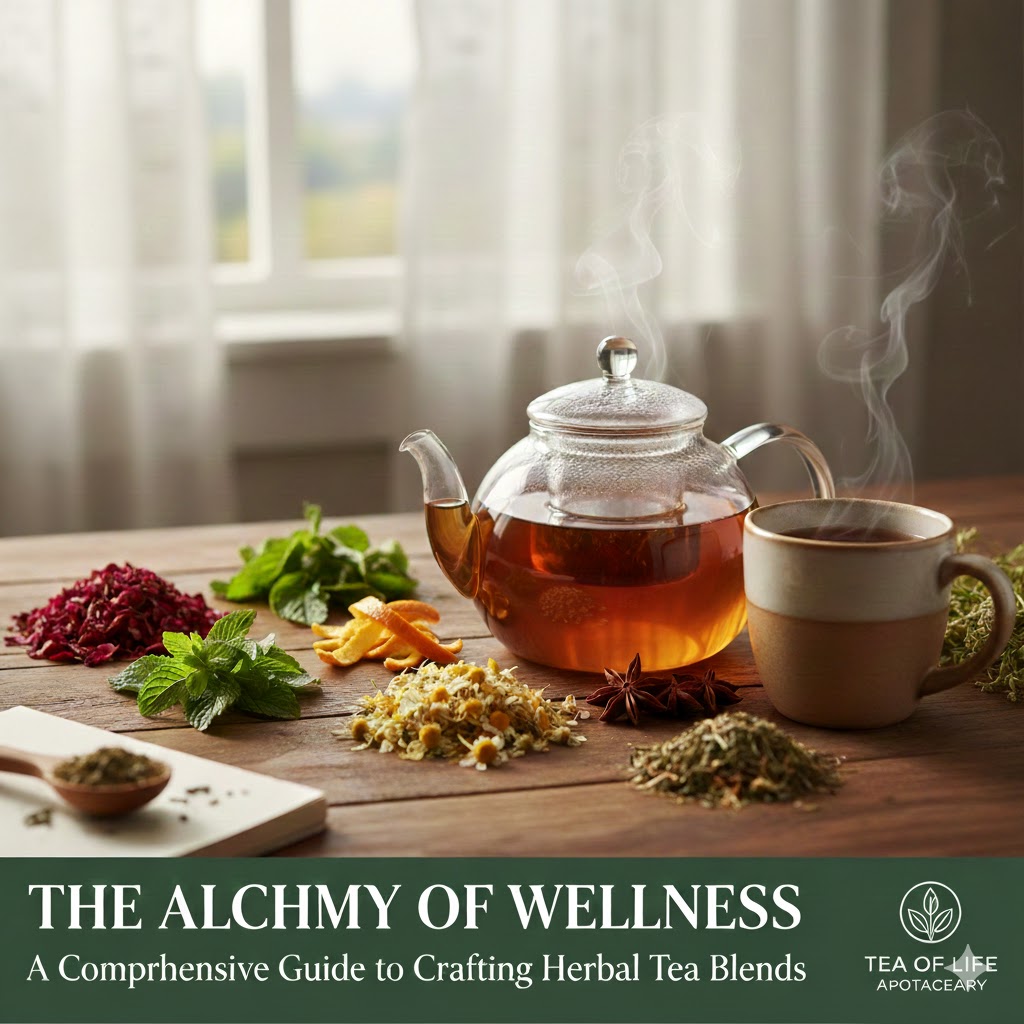
The world of botanicals offers an infinite palette of flavors, aromas, and therapeutic properties. While a single-ingredient infusion like pure peppermint or chamomile has its own charm, the true magic happens when different plants are brought together. This practice, known as creating Herbal Tea Blends, is a centuries-old tradition that combines the art of flavor with the science of herbalism. By blending specific leaves, flowers, roots, and spices, you can create a synergistic effect where the total benefit of the tea is greater than the sum of its individual parts.
The Philosophy of Herbal Tea Blends: Synergy and Balance
In the world of the herbalist, a blend is never just a random assortment of ingredients. It is a carefully constructed formula designed to achieve a specific goal, whether that is to soothe a sore throat, lift the spirits, or simply provide a complex sensory experience.
The Three-Part Formulation Strategy
Professional blenders often follow a classic hierarchy when constructing herbal tea blends. First, there is the Active Ingredient, which provides the primary medicinal or functional benefit (such as Echinacea for immunity). Second is the Supportive Herb, which nourishes the body systems related to the goal (such as Rosehips for Vitamin C). Finally, there is the Catalyst or Harmonizer, usually an aromatic herb like Ginger or Licorice root, which improves the flavor and helps the body assimilate the other ingredients more effectively.
Achieving Flavor Equilibrium
A well-crafted blend must balance the five basic tastes: sweet, sour, bitter, pungent, and salty. For instance, the bitterness of Dandelion root can be balanced by the natural sweetness of Stevia leaf or the tartness of Hibiscus. This balance ensures that the tea is not only a “remedy” but a beverage you truly look forward to drinking.
Popular Categories of Herbal Tea Blends and Their Benefits
Because herbal infusions are naturally caffeine-free, they serve as versatile tools for wellness throughout the day. Different blends are formulated to align with the body’s circadian rhythm and specific health needs.
Relaxation and Sleep Blends
Perhaps the most sought-after category, these blends focus on nervine herbs that calm the central nervous system. Common combinations include Chamomile and Lavender for deep relaxation, or Valerian root and Passionflower for those struggling with insomnia. These blends act as a gentle signal to the brain that it is time to transition into a state of rest.
Digestive and “After-Dinner” Blends
Digestive blends are designed to stimulate bile production and relax the muscles of the gastrointestinal tract. A classic pairing is Peppermint and Fennel, which works wonders for bloating. Ginger and Lemon Verbena blends are also popular for settling the stomach after a heavy meal while providing a refreshing, citrusy finish.
Immune Support and Vitality Blends
These blends are often rich in antioxidants and adaptogens. Ingredients like Elderberry, Astragalus, and Holy Basil (Tulsi) are frequent stars in these formulations. During the colder months, these herbal tea blends provide a fortifying shield, helping the body’s natural defenses remain resilient against seasonal stressors.
Energy and Focus Blends
While they contain no caffeine, certain herbs can provide a cognitive boost. Rosemary, Peppermint, and Gotu Kola are frequently blended to enhance mental clarity and alertness. These are excellent alternatives for those looking to avoid the jitters associated with coffee or black tea.
The Importance of Sourcing: Quality in Every Leaf
The efficacy and safety of a tea blend are entirely dependent on the quality of the raw botanicals used. In a globalized market, understanding where your herbs come from is a critical component of the tea-drinking experience.
Organic vs. Conventional Botanicals
Because herbs are often dried whole, any pesticides used during cultivation remain on the plant and end up in your cup. Choosing organic herbal tea blends ensures that you are consuming pure plant medicine without the interference of synthetic chemicals. Furthermore, organic farming practices tend to produce plants with higher concentrations of secondary metabolites the very compounds responsible for the tea’s health benefits.
The Superiority of Loose-Leaf Blends
While tea bags are convenient, they often contain “fannings” or “dust”—the broken remnants of herb leaves that have lost most of their essential oils. Loose-leaf blends maintain the integrity of the plant material. When you can see the whole flower heads of chamomile or the vibrant orange of dried orange peel, you know you are getting the full spectrum of the plant’s potency.
How to Steep Herbal Blends for Maximum Potency
To get the most out of your artisanal blends, you must respect the different requirements of the plant parts involved.
Water Temperature: For most herbal blends, a “rolling boil” ($212^\circ\text{F}$) is necessary. This heat is required to break down the cellular walls of tougher ingredients like barks, seeds, and roots.
Steeping Time: Unlike green tea, which turns bitter if steeped too long, herbal infusions usually require more time. A standard steep is 7 to 10 minutes, but “medicinal” infusions can go for 15 to 20 minutes to extract every bit of mineral and antioxidant content.
The Vessel: Always steep with a lid. Many of the most beneficial parts of herbs are volatile oils. If you don’t cover your cup, those healing properties literally evaporate into the air.
Creating Your Own Ritual: A Moment of Mindfulness
Beyond the physical benefits, the act of preparing herbal tea blends is a powerful mindfulness practice. In a fast-paced, digital world, the five minutes spent watching herbs dance in hot water serves as a necessary “pause” button. It encourages us to engage our senses—the visual beauty of the colorful petals, the earthy aroma of the steam, and the warmth of the mug in our hands.
Struggling with the natural bitterness of certain roots? Discover our secrets for making herbal tea taste better using natural sweeteners and aromatic spices without compromising health benefits.
Conclusion
Embracing herbalism through tea is one of the simplest yet most profound ways to reconnect with the natural world. Whether you are seeking a quiet moment of peace at the end of a long day or a functional boost to your morning routine, the right blend can make all the difference. At Tea of Life Apothecary, we believe that every sip should be an experience of purity and purpose. Our herbal tea blends are meticulously curated, combining ancient botanical wisdom with the highest quality organic ingredients to support your unique journey toward wellness. We don’t just sell tea; we provide the tools for a more intentional, vibrant life. Discover the transformative power of nature’s finest infusions with Tea of Life Apothecary, where every blend is a celebration of life itself.